
Working-era variety
Preserved towers reflect early beacon stations through later modernization phases.
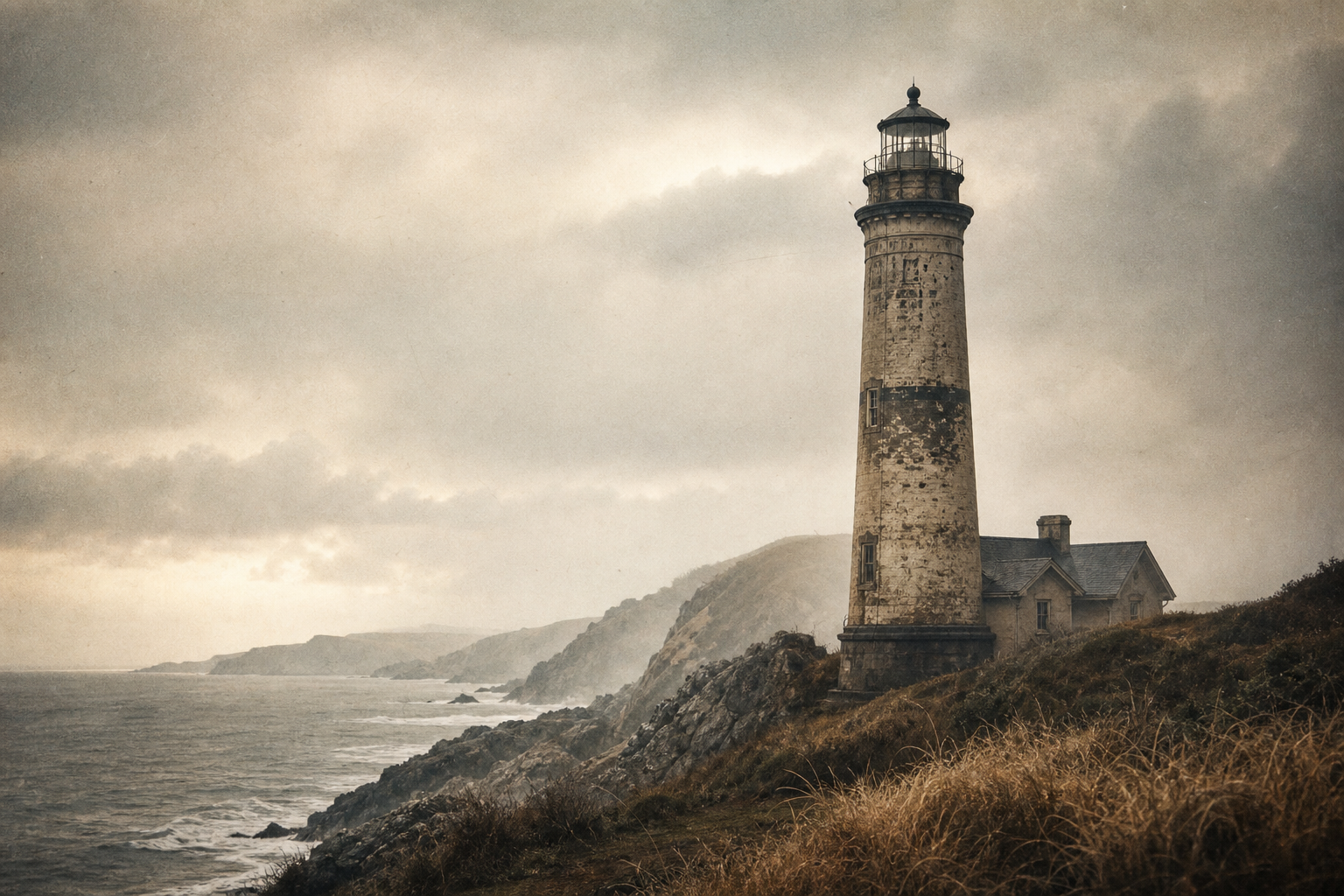
Explore a carefully preserved record of lighthouse history through archival photographs, keeper recollections, and place-based coastal context.
A concise record of northern coast lighthouse history, organized for quick reading and deeper research.
Preserved Towers Overview
Working-era variety
Preserved towers reflect early beacon stations through later modernization phases.
Restoration in layers
Many sites show careful repair cycles rather than one-time reconstruction.
Coastal spread
Surviving towers are distributed across harbors, points, and exposed approach routes.
Archive depth
Photographs, keeper notes, and preservation records combine for cross-checked context.
KEEPER STORIES
From dawn wick-trimming to storm-night rounds, these fragments trace isolation, maintenance, and unwavering vigilance along the northern stations.
ARCHIVAL CLOSE-UP
Lantern prism etched by sea-salt fog, c. 1912.
Keeper Elin Markham logged each lens polish before sunrise, noting wind direction and soot buildup so the beacon stayed sharp through winter haze.
CAPTION PANEL
“Bell struck every forty seconds; cliffs answered slower than the sea.”
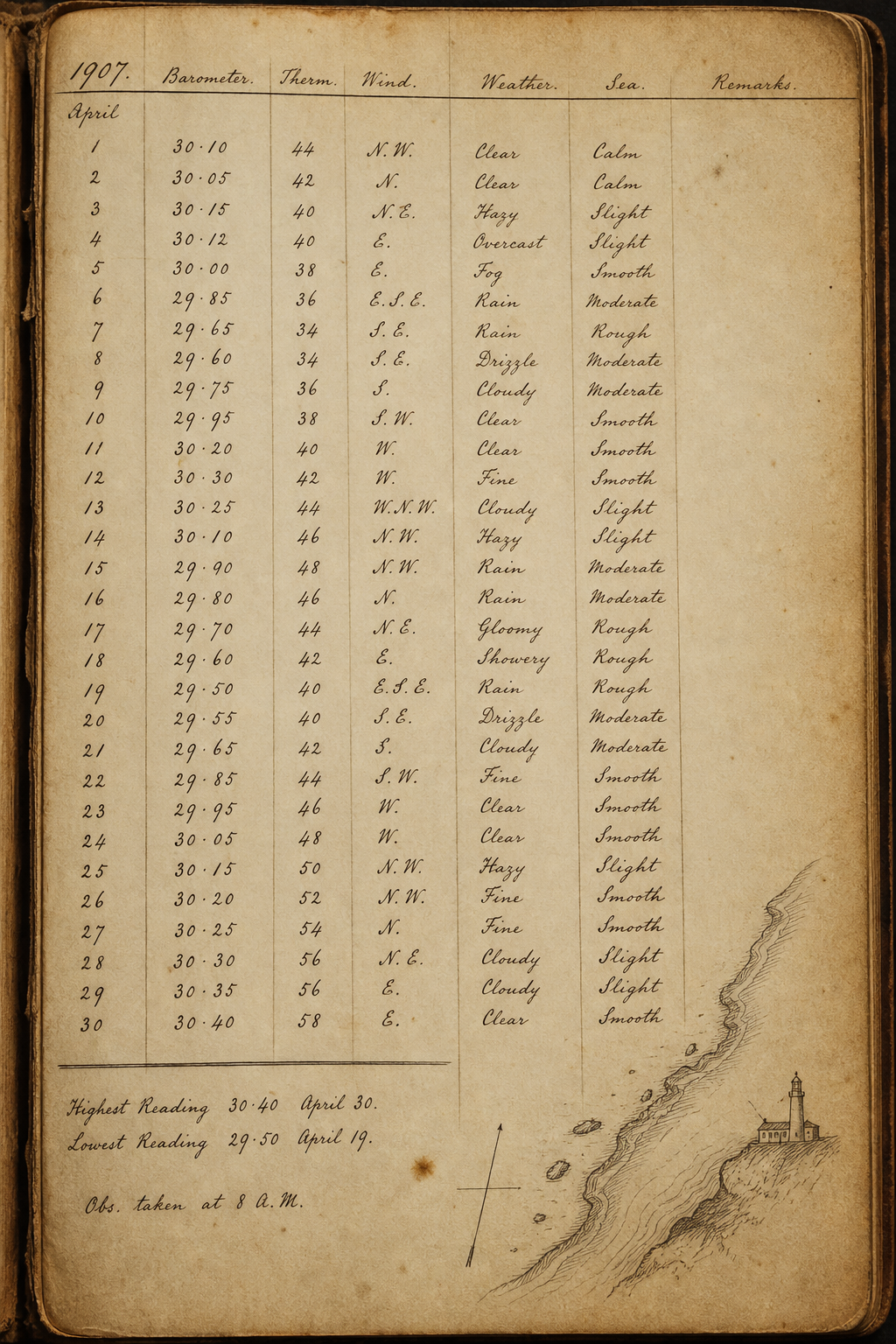
During thick January banks, night entries tracked bell intervals by hand, balancing rope tension and numb fingers to keep sound carrying beyond the headland.
KEEPER ARTIFACT
One shared key moved from oil room to gallery hatch each shift, a small ritual confirming every hatch, record drawer, and signal locker was secured before dusk.
Follow the preserved towers from west headlands to northern shoals through a readable shoreline reference.
N
COAST CHART
A small network of rooms, records, and local stewards that helps keep the northern coast's lighthouse memory verifiable and shared.
NCR / ROOM 03
North Cape Reading Room Archive
watch logs, wick ledgers, station correspondence
HMR / STACK B
Harbor Museum Reference Cabinet
lens diagrams, harbor charts, keeper registers
LHS / SHELF 11
Local Historians Field Collection
oral notes, shoreline annotations, date cards
RRL / CASE 07
Restoration Record Ledger
masonry repairs, lantern glazing, paint cycles
CSA / FOLIO 19
Coastal Society Archive Table
meeting minutes, preservation notices, maps
PCL / DRAWER 02
Photographic Catalog Ledger
glass negatives, coastal prints, caption slips
Research FAQ
These notes summarize what has endured, what archival material can and cannot show, and how daily lighthouse life connected to long-term preservation.
The archive highlights towers with verified surviving structures, including those still active and those preserved as historic landmarks. Each entry notes structural status, access limits, and the most recent preservation reference date.
Many images are scans of prints, lantern slides, or field negatives, so grain, edge wear, and exposure shifts are normal. Captions distinguish documented facts from inferred dating when source notes are incomplete.
Keepers maintained the light apparatus, logged weather and visibility, monitored fuel or electrical systems, and cared for station grounds. In remote posts, duties also included supply planning and emergency signaling support.
Projects usually balance structural safety, historical accuracy, and coastal weather resilience. Preservation records in this archive cite public agencies, local trusts, and documented intervention phases whenever available.
Shoreline retreat, harbor engineering, and vegetation shifts have altered sightlines and access routes. Comparing dated photographs with current survey notes helps explain why some towers now sit farther inland while others face increased wave exposure.
Each tower is both a landmark and a lived record of coastal memory—visit gently, observe closely, and leave the site as you found it.